
How to Design a Home Around Ocean Views
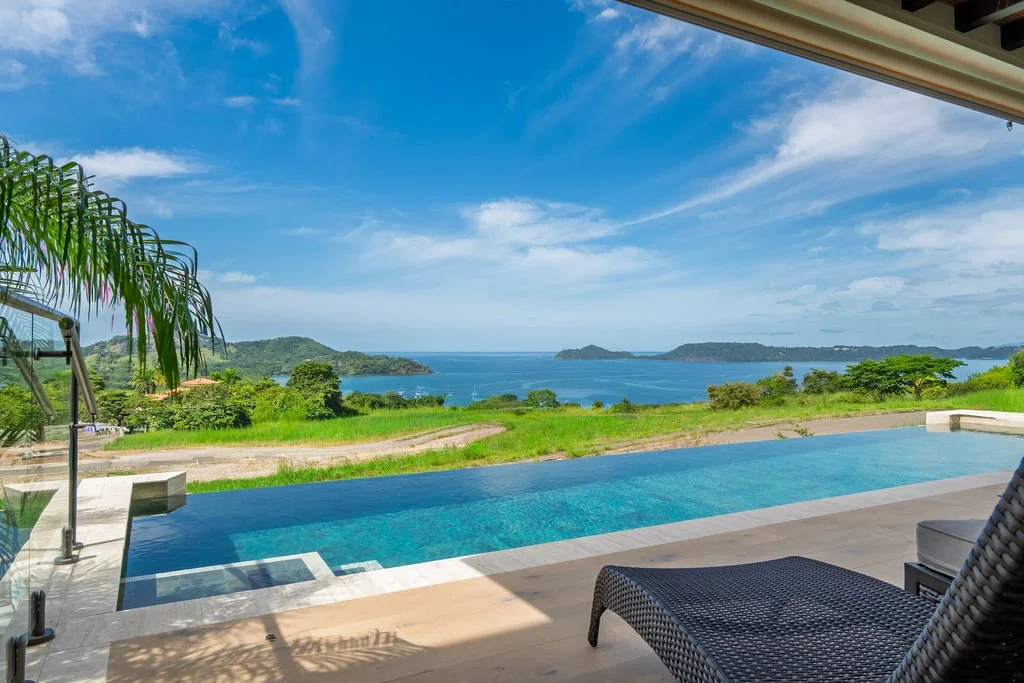
Designing a Luxury Home That Makes the Landscape Part of the Architecture
Few things compare to waking up to an unobstructed Pacific Ocean view. In Costa Rica, an extraordinary landscape can be one of the greatest assets of a property—and one of the most important considerations when designing a custom home.
But having an ocean view and designing a home around an ocean view are two very different things.
The best ocean-view residences don't simply place large windows on the side of the house facing the water. They are carefully planned around orientation, elevation, circulation, natural light, ventilation, privacy, outdoor living, and the changing character of the landscape throughout the day.
At Grupo Pacífico, we approach ocean-view homes as an opportunity to make the landscape an integral part of the architecture. Through our sustainable luxury design-build approach, we consider the site, the architecture, and the way the home will be experienced as one connected system.
Here are some of the most important principles to consider when designing a home around ocean views.
1. Start With the Land, Not the Floor Plan

Before deciding where the kitchen, bedrooms, or living room should go, understand the property.
Every site has its own opportunities and constraints. A steep hillside, existing vegetation, neighboring properties, access roads, prevailing winds, and the position of the sun can all influence how the home should be designed.
A detailed site analysis can help determine:
Where the strongest ocean views are located
How the property receives morning and afternoon sunlight
Where prevailing breezes come from
Which areas offer the greatest privacy
How the terrain can be used to create different elevations
Where construction and access should occur
How the building can respond to the natural topography
Sometimes the best ocean view isn't from the highest point of the property. It may come from a carefully positioned terrace, elevated living area, or pool.
The land should inform the architecture.
Check out Montebello 19 Progress
2. Frame the Ocean Instead of Simply Opening Everything
More windows don't necessarily create a better view.
The goal is to frame the landscape intentionally.
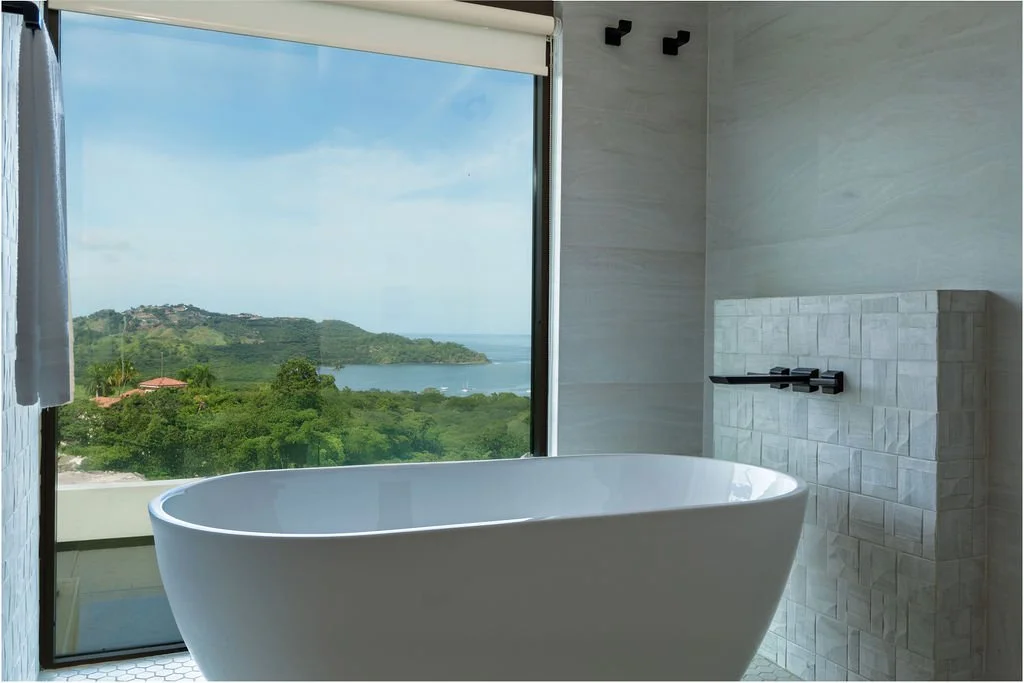
Architectural openings can be positioned to create specific visual relationships with the ocean, mountains, vegetation, and sky. A carefully framed view can become almost like a piece of art within the home.
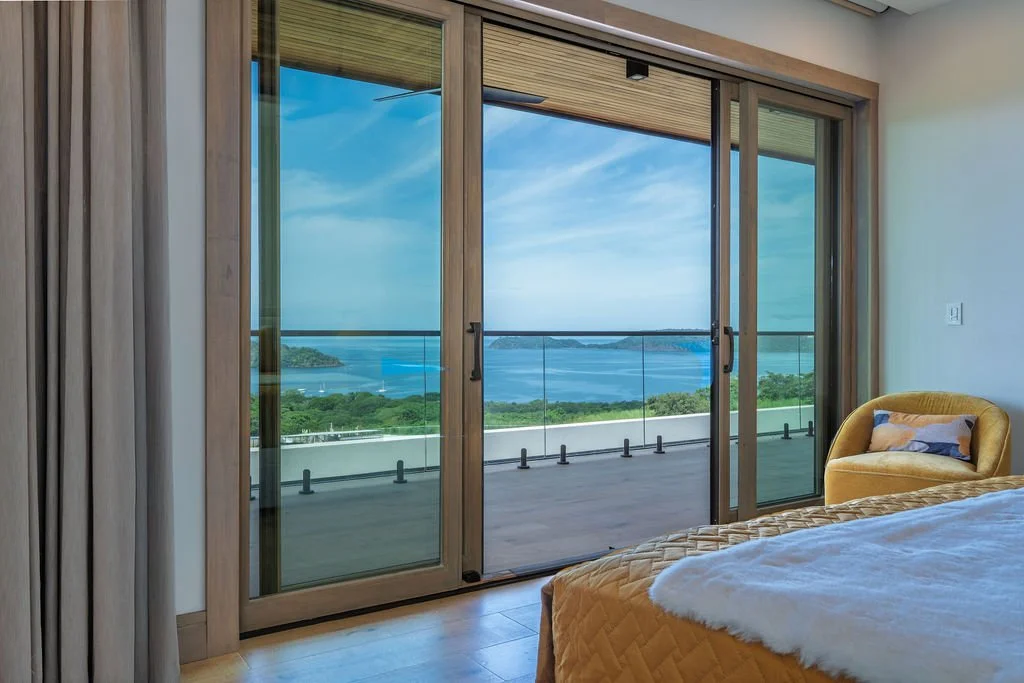
Large windows and sliding doors can provide expansive views, while smaller openings can create more intimate moments.
The result is a home where the landscape is experienced differently from every room.
3. Consider the View From Every Important Space
The main living area may have an extraordinary ocean view, but what about the bedroom?
What do you see when you wake up?
What does the kitchen overlook?
Where will you have your morning coffee?
Where will you watch the sunset?
A successful ocean-view home considers these everyday experiences during the planning stage. Principal spaces such as living rooms, kitchens, bedrooms, terraces, and wellness areas can each be oriented toward the landscape in different ways.
The objective isn't simply to maximize the view. It's to make the view part of everyday life.
4. Design for Sunrise and Sunset
Ocean views change dramatically throughout the day, and as designers, we plan accordingly.
Morning light can create a completely different atmosphere from afternoon sun and sunset.
Understanding solar orientation allows architects to position spaces according to how they will actually be used.
A breakfast terrace might benefit from morning light, while an outdoor lounge could be positioned to capture the sunset.
This also affects shading. West-facing terraces can experience intense afternoon heat, making carefully designed roof overhangs, pergolas, vegetation, and other shading strategies essential.
Good design considers not only what you see, but when you see it.
5. Use Indoor-Outdoor Living to Expand the Experience
One of the defining characteristics of luxury homes in Costa Rica is the relationship between indoor and outdoor spaces.
An ocean-view living room can open onto a shaded terrace.
The terrace can connect to an infinity-edge pool.
The pool can visually extend toward the Pacific.
Suddenly, the boundary between architecture and landscape becomes almost invisible.
Large sliding doors, covered terraces, outdoor kitchens, shaded lounges, and carefully positioned pools allow the ocean view to become part of the home's everyday experience rather than something observed only through glass.
This is where tropical modern architecture can be particularly powerful.
6. Make the Pool Part of the View
In an ocean-view home, the pool can become one of the most important architectural elements on the property.
An infinity-edge pool can create the illusion that the water continues directly into the ocean, visually extending the horizon and reinforcing the connection between the home and its setting.
But achieving this effect requires careful coordination.
Pool elevation, structural engineering, waterproofing, drainage, hydraulic systems, and the relationship between the pool and surrounding terraces all need to be considered from the beginning.
A beautiful pool is not simply a visual feature.
It is an engineered structure that needs to perform for years in a demanding tropical environment.
7. Protect the View Without Sacrificing Comfort
Maximizing ocean views doesn't mean eliminating every wall or shade structure.
In Costa Rica, thoughtful shading is essential.
Deep roof overhangs, covered terraces, pergolas, architectural screens, and carefully selected vegetation can protect interiors and outdoor spaces from intense sunlight while preserving visual connections with the ocean.
The same principle applies to glazing.
High-performance windows can provide expansive views while helping control solar heat gain and improve interior comfort.
The goal is to create a home where you can enjoy the view without overheating the spaces designed around it.
8. Use Natural Ventilation to Work With the Ocean Environment
An ocean-view property often comes with another valuable asset: natural breezes.
Properly oriented openings can encourage cross-ventilation, allowing air to move naturally through the home.
This can improve indoor air quality and comfort while reducing reliance on mechanical cooling.
Natural ventilation works particularly well when combined with:
Strategic building orientation
Operable windows and doors
High ceilings
Shaded openings
Covered outdoor spaces
Thoughtful interior layouts
These passive strategies are an important part of sustainable luxury design-build and demonstrate how sustainability can improve the experience of luxury rather than compromise it.
9. Preserve the Landscape Around the View
The ocean shouldn't be the only natural element considered.
A beautiful ocean-view home should also maintain a strong relationship with the surrounding landscape. Native and climate-appropriate plants can help frame views, provide privacy, reduce heat, and connect the architecture to the natural environment.
Thoughtful landscaping can also reduce irrigation requirements and maintenance while supporting local ecosystems.
In some cases, the best design decision is simply knowing what not to remove.
Preserving mature vegetation and working with the existing landscape can create a sense of place that cannot be replicated with newly planted gardens. Its also required by law in Costa Rica.
10. Think About Privacy
Ocean views often mean elevated or exposed properties.
That creates a unique challenge: how do you maximize the view while maintaining privacy?
Strategic placement of walls, landscaping, screens, terraces, and architectural volumes can help create private outdoor spaces without blocking the horizon.
Bedrooms may require a different approach from communal spaces.
A private terrace might be oriented toward the ocean while being screened from neighboring properties.
Luxury is not simply having an incredible view.
It's being able to enjoy it privately.
11. Design Around the Way the Home Will Actually Be Used
An ocean-view property should be designed around lifestyle—not just photography.
Where will the family gather?
Where will guests spend time?
Where will people have breakfast?
Where will children swim?
Where will someone practice yoga?
Where will you sit at sunset?
These questions can influence everything from the size and orientation of terraces to the location of outdoor kitchens, pools, bedrooms, and wellness spaces.
The most successful homes feel intuitive because the architecture reflects the rhythms of everyday life.
12. Consider the Long-Term Performance of the Home
An extraordinary view is only one part of a successful luxury residence.
The home also needs to perform in Costa Rica's climate for decades.
Materials should be selected for durability in tropical and coastal conditions. Drainage and waterproofing need to be carefully engineered. Glazing, roofing, mechanical systems, and finishes should be appropriate for the environment.
This is particularly important in oceanfront and ocean-view properties, where salt air, humidity, intense sunlight, and seasonal rainfall can accelerate material deterioration.
True luxury means designing for the future—not simply the photograph.
Ocean Views as an Architectural Asset
This is a design principle at Grupo Pacifico: The greatest ocean-view homes don't compete with their surroundings. They amplify them.
Architecture should create moments that make residents pause and appreciate where they are, from the first coffee of the morning to the final light of sunset.
That requires more than beautiful finishes. It requires thoughtful site planning, architectural precision, construction expertise, and an understanding of how the home will interact with its environment.
At Grupo Pacífico, we believe the most successful sustainable luxury design-build projects begin by listening to the land. The ocean is already the masterpiece. Our job is to design the home that allows you to experience it.
Our Thoughts
Designing a luxury home around ocean views requires a holistic approach. We really believe the strongest projects consider the land before the floor plan, the sun before the windows, the breeze before the air conditioning, and the lifestyle before the finishes.
When architecture, landscape, sustainability, and construction are considered together, the result is more than a home with a beautiful view. It becomes a home that is defined by its place, a home built to function and prosper in its surrounding.
For those building in Costa Rica, that distinction can transform an extraordinary property into an extraordinary living experience.
Grupo Pacifico
grupopacificocr.com
info@grupopacificocr.com
WA Business: +506.8657.7880